
Agro processing is the one sector where the case for a district location is strongest — because the raw material is already there, and moving it is the expensive part.
Locate near the crop, not the customer
Most manufacturing locates toward its customers. Agro processing frequently reverses that, because agricultural raw material is bulky, perishable and expensive to transport relative to its value.
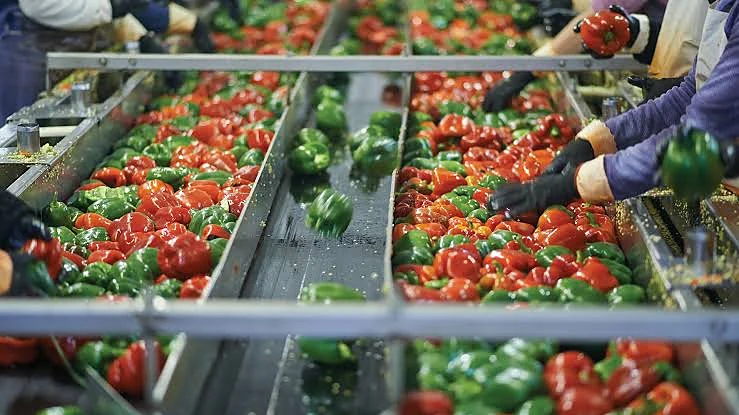
Processing close to the growing area reduces transport cost, cuts spoilage and shortens the time between harvest and processing — which for many crops directly determines product quality.
Haryana is a substantial agricultural state, and Bhiwani sits within that agricultural landscape rather than outside it. For an operation processing regionally grown material, that proximity is a structural advantage, not a compromise.
Processing capacity is chasing a very large base
India's food processing market stood at Rs. 30,49,800 crore (US$ 354.5 billion) in 2024, projected to reach roughly US$ 535 billion by FY26 and US$ 700 billion by 2030 per IBEF.
The sector already contributes about 7.9% of manufacturing GVA, close to 8% of agriculture GVA and approximately 13% of India's national exports. Processed food makes up around 20.4% of agri-exports — a share that rises as more raw output is processed domestically rather than shipped unprocessed.
Employment sits at roughly 1.93 million in the registered sector and 5.1 million unregistered, which tells you something useful: a large part of this industry is small and mid-sized units. That is precisely the segment a serviced industrial park is built for.
Haryana's own agricultural exports reached Rs. 4,752 crore (US$ 536 million) in FY25.
Why specification decides the outcome
The floor, the span and the power supply are the expensive things to change later. They are worth more scrutiny than the rent line.
Seasonality shapes the building
Agro processing is rarely level across the year. Many operations run intensively during and after harvest and quietly the rest of the time.
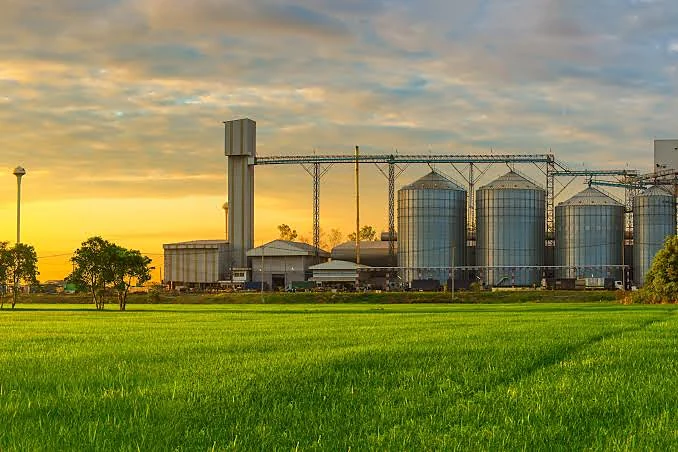
That has two consequences for site selection. First, you need storage sized for peak intake, not average throughput — often far more than newcomers expect. Second, you need a workforce arrangement that can flex, which favours locations with a local labour catchment rather than a commuting one.
Design the site for the peak week. The rest of the year takes care of itself.
Utilities: water, power and effluent
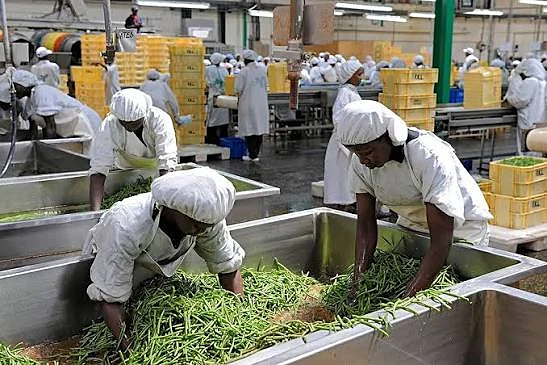
Food processing tends to be water-intensive — washing, blanching, cleaning down. Confirm supply adequacy honestly and plan for effluent handling from the outset; it is a regulatory requirement, not an afterthought.
Power reliability matters especially where any part of the process is temperature-controlled. An interruption that spoils a batch of chilled or frozen product costs far more than the electricity.
Our parks provide metered 24×7 industrial supply, assured industrial water and engineered storm-water drainage. Process effluent requirements should be discussed specifically for your operation.
Hygiene and the building fabric
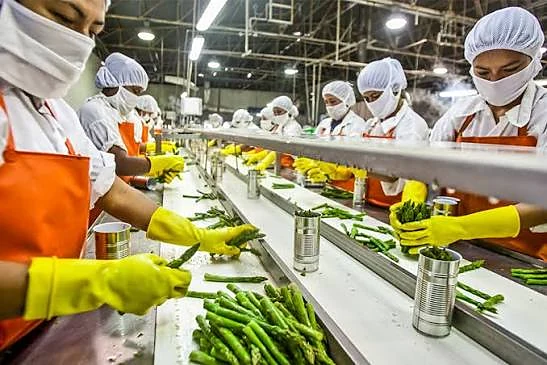
Food processing carries stringent requirements on surfaces, drainage, pest exclusion and segregation of raw and finished material. Building fabric is part of your food-safety system.
Standard industrial sheds can host many agro operations — grading, sorting, packing, dry processing, storage — but wet or regulated processing usually justifies built-to-suit so the finishes and layout are right from day one.
| Measure | Figure | Period | Source |
|---|---|---|---|
| Food processing market size | Rs. 30,49,800 crore (US$ 354.5 bn) | 2024 | IBEF |
| Projected market size | Rs. 45,84,415 crore (US$ 535 bn) | FY2025-26 | IBEF |
| Projected market size | Rs. 60,22,100 crore (US$ 700 bn) | 2030 | IBEF |
| Share of manufacturing GVA | ~7.9% | Current | IBEF |
| Share of agriculture GVA | ~8% | Current | IBEF |
| Share of national exports | ~13% | Current | IBEF |
| Processed food share of agri-exports | ~20.4% | Current | IBEF |
| Employment (registered) | 1.93 million | Current | IBEF |
| Employment (unregistered) | 5.1 million | Current | IBEF |
| Haryana agricultural exports | Rs. 4,752 crore (US$ 536 mn) | FY2024-25 | IBEF |
Cold storage as an adjacent opportunity
Many agro operations discover that cold storage is as valuable as processing — sometimes more. Chilled and frozen storage capacity near a growing region serves both your own product and neighbouring producers.
If cold storage is on your roadmap, factor in the power requirement and the expansion space now, rather than after the first building is up.