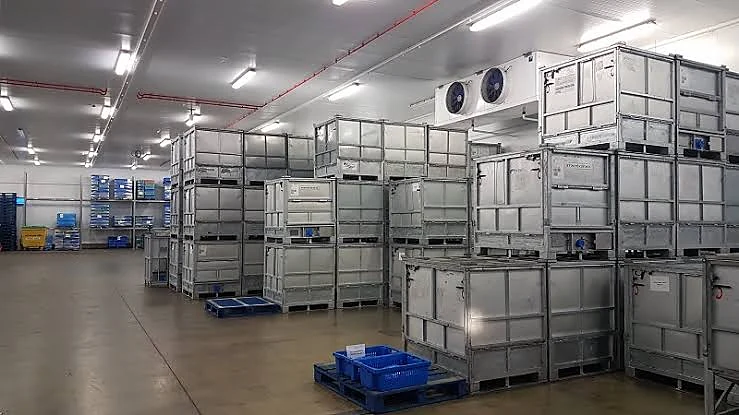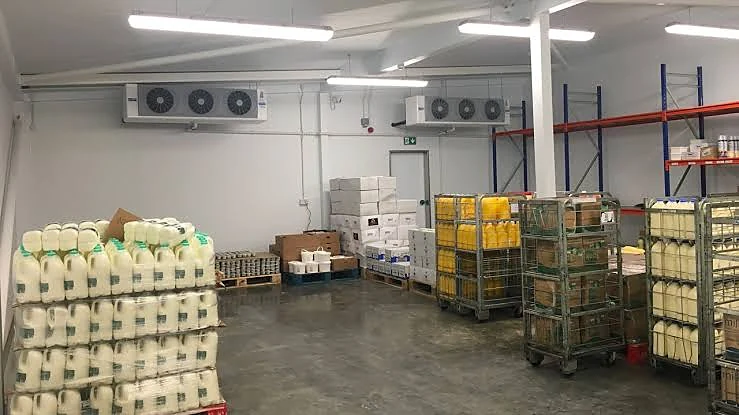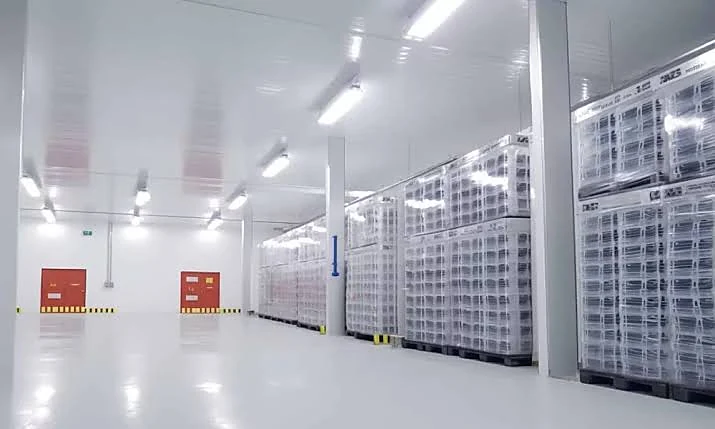
In cold chain, the building is a thermal system and the power supply is life support. Everything else is secondary.
Power is the whole business
A cold storage facility converts electricity into preserved product value. Interrupt the electricity for long enough and the stored value is destroyed — along with, frequently, the customer relationship.
This makes two things non-negotiable at site selection. First, sanctioned load adequate for the refrigeration plant at peak, with headroom for expansion. Second, a credible backup arrangement — generator capacity sized for the refrigeration load, not merely for lighting and offices.
Ask specifically about supply stability in the area, not just availability. Frequency and duration of interruption determine how much generator capacity and fuel storage you actually need.
Why cold chain demand keeps compounding
Cold chain is a derived business — its demand is set by what the food processing and fresh-produce sectors need moved and held. That base was US$ 354.5 billion in 2024 and is projected at around US$ 700 billion by 2030 (IBEF).
Processed food already accounts for roughly 20.4% of India's agri-exports, and export markets impose cold-chain integrity requirements that domestic trade historically did not. Every incremental percentage point of processing and export sophistication translates into chilled and frozen capacity that has to exist physically, near the produce.
Set against that, India's total warehousing stock of roughly 610 million sq ft (2025) is overwhelmingly ambient. Temperature-controlled capacity remains a comparatively small share — which is the opportunity and the operating challenge in the same sentence.
The envelope determines running cost
Insulation quality, panel joint integrity, door design and vestibule arrangement set your energy consumption for the life of the facility. A poorly detailed envelope leaks money continuously and cannot be economically fixed later.
Cold chain is therefore a natural built-to-suit case. A standard industrial shed can sometimes host a cold room built inside it, but a purpose-designed envelope is usually better engineering.
Where a shed is used as the outer structure, the roof and wall specification, and the shading and ventilation of the outer skin, still matter to the thermal load.