
Fabrication is unforgiving of the wrong building. Columns in the wrong place, a floor that cracks under load, or a roof too low for the crane will cost more to work around than the plot ever saved.
Clear span is the specification that matters most
Fabrication work moves long material — beams, plates, sections, assembled frames. Every internal column is an obstacle that dictates how you lay out the shop and how material flows through it.
A pre-engineered clear-span steel structure removes internal columns across the working width. That is why almost every purpose-built fabrication shed uses one, and why converting a column-heavy warehouse into a fabrication shop rarely ends well.
When you assess a shed, ask for the clear span dimension and the bay spacing, not just the total floor area. Two sheds of identical square footage can have entirely different usable capability.
Engineering is India's largest export category
Engineering goods are, by value, India's single largest export category. Exports reached US$ 122.52 billion in FY2025-26, up from US$ 116.67 billion in FY25 and US$ 109.32 billion in FY24 — steady compounding rather than a spike.
Domestic capital-goods production has moved faster still, rising from Rs. 2,66,672 crore in FY21 to Rs. 5,69,900 crore in FY25 — more than doubling in four years, per IBEF. Capital goods now account for about 1.9% of India's GDP.
For a fabrication business, the read-through is straightforward: this is a sector with genuine export pull and a domestic base that is growing. Both reward capacity that can be added without relocating.
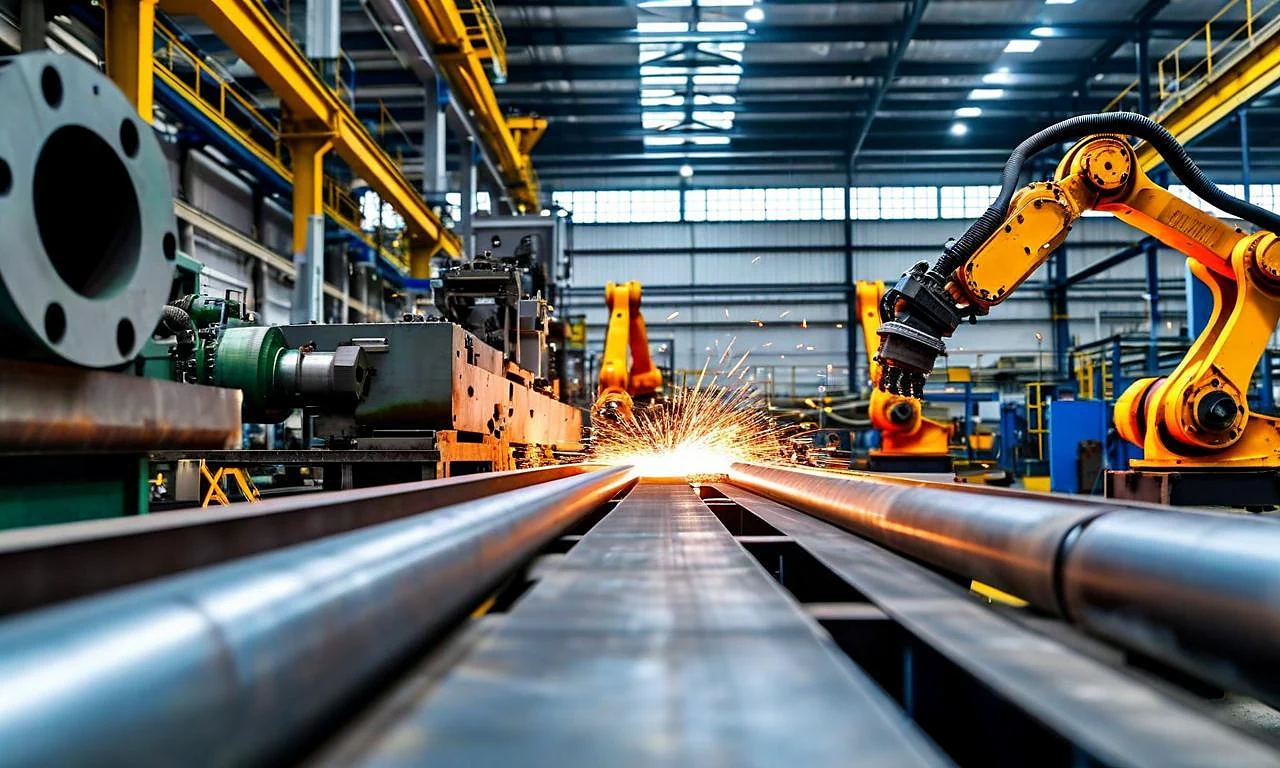
Why specification decides the outcome
The floor, the span and the power supply are the expensive things to change later. They are worth more scrutiny than the rent line.
Height, cranes and the lift you will need later
Clear height determines what you can lift and how high you can stack. Our sheds are built to 8 metres clear height, which accommodates a substantial range of fabrication work along with overhead handling.
If your process needs an overhead travelling crane, say so before construction. Crane loads are carried by the structure itself, and retrofitting a gantry into a building not designed for it means strengthening columns and foundations — expensive, disruptive and sometimes impossible.
This is exactly the case for built-to-suit: take the plot, specify the crane capacity and bay size you need, and have the structure engineered around it from the start.
Floor, power and the unglamorous essentials
Floor. Heavy plate handling, machine bases and forklift traffic all attack the floor. Specify the load and finish you need up front.
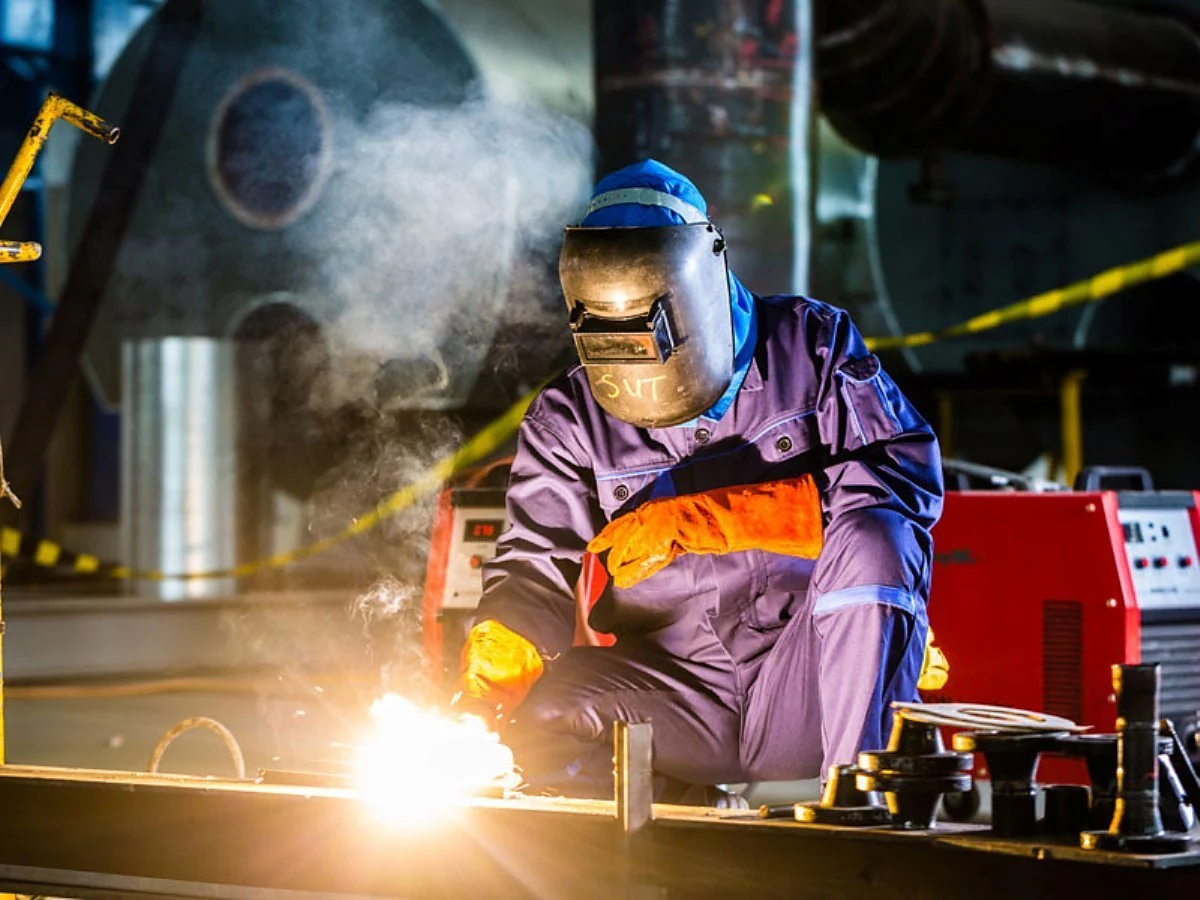
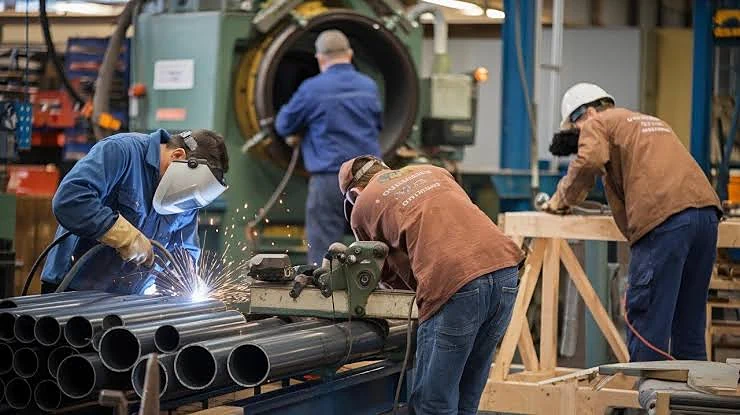
Power. Welding sets, plasma cutters, compressors and machine tools draw hard and draw suddenly. Sanctioned load and supply stability determine whether you run three shifts or nurse the equipment.
Yard. Fabrication generates outdoor work — material storage, loading, sometimes assembly. A shed with no usable yard forces you to work in the access road, which becomes everyone's problem.
Fire provision. Hot work demands a serious approach to fire safety. Confirm the hydrant network and the park's overall provision.
Buy built, or build to suit?
A ready-to-move shed gets you operating without a construction cycle — no capital locked up for months, no project management burden, revenue from occupation almost immediately. For general engineering, standard sheds often serve perfectly well.
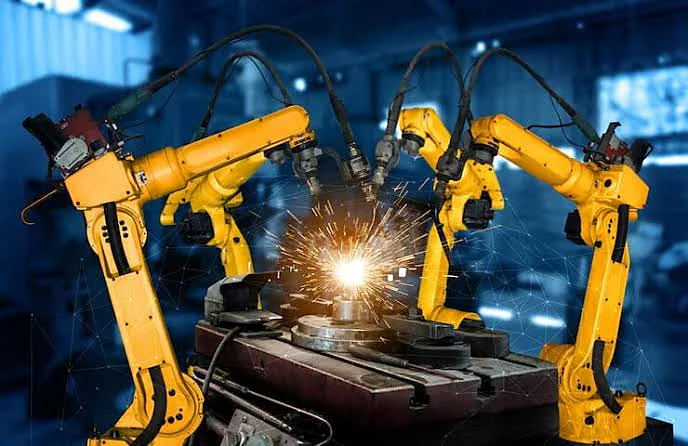
Built-to-suit makes sense when your process imposes requirements a standard shed cannot meet: unusual bay widths, heavy crane loads, deep foundations, specific power configurations. The build takes longer but the building fits.
The wrong choice is taking a standard shed and hoping to adapt it to a process that needed engineering. That compromise tends to surface a year in, when changing anything is hardest.
| Measure | Figure | Period | Source |
|---|---|---|---|
| Engineering goods exports | US$ 122.52 bn | FY2025-26 | IBEF |
| Engineering goods exports | US$ 116.67 bn | FY2024-25 | IBEF |
| Engineering goods exports | US$ 109.32 bn | FY2023-24 | IBEF |
| Capital goods production | Rs. 5,69,900 crore (US$ 67.40 bn) | FY2024-25 | IBEF |
| Capital goods production | Rs. 2,66,672 crore (US$ 36.04 bn) | FY2020-21 | IBEF |
| Capital goods share of GDP | 1.9% | Current | IBEF |